Rosemont, Mount Vernon connection visualized at Laurens County Museum
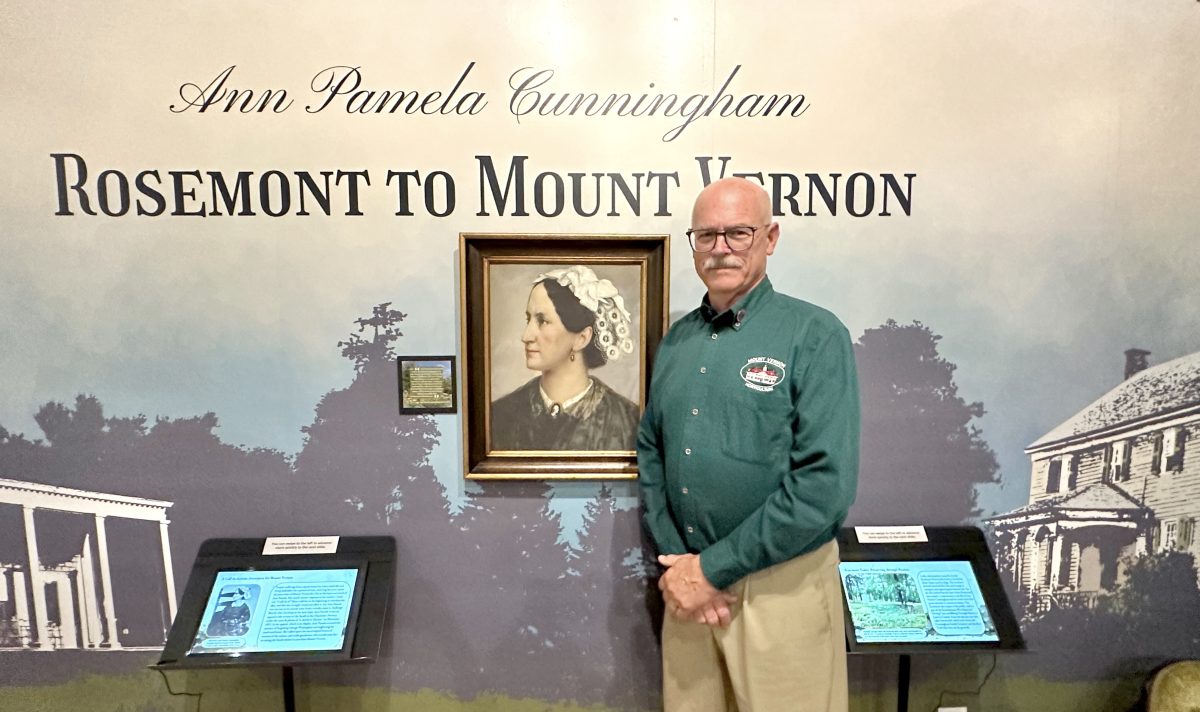
Mount Vernon Head Landscaper and Clemson grad Dean Norton said Laurens County resident Ann Pamela Cunningham is responsible for saving George Washington’s home, Mt. Vernon. Photos by Judith Brown
Laurens, South Carolina – The Laurens County Museum opened a permanent exhibition last week, celebrating the county’s storied connection to Mount Vernon, the Virginia home of the nation’s first president.
The exhibition entitled, “From Rosemont to Mount Vernon,” tells the story of Ann Pamela Cunningham’s successful fight to save Mount Vernon from destruction. Cunningham lived at Rosemont Plantation in Laurens County, while George Washington lived at Mt. Vernon from 1754 until his death in 1799.
The permanent exhibition is in a room within the Laurens County Museum with a broad wall bearing the images of both Mount Vernon and Rosemont, pictured as it was before it was destroyed by fire.
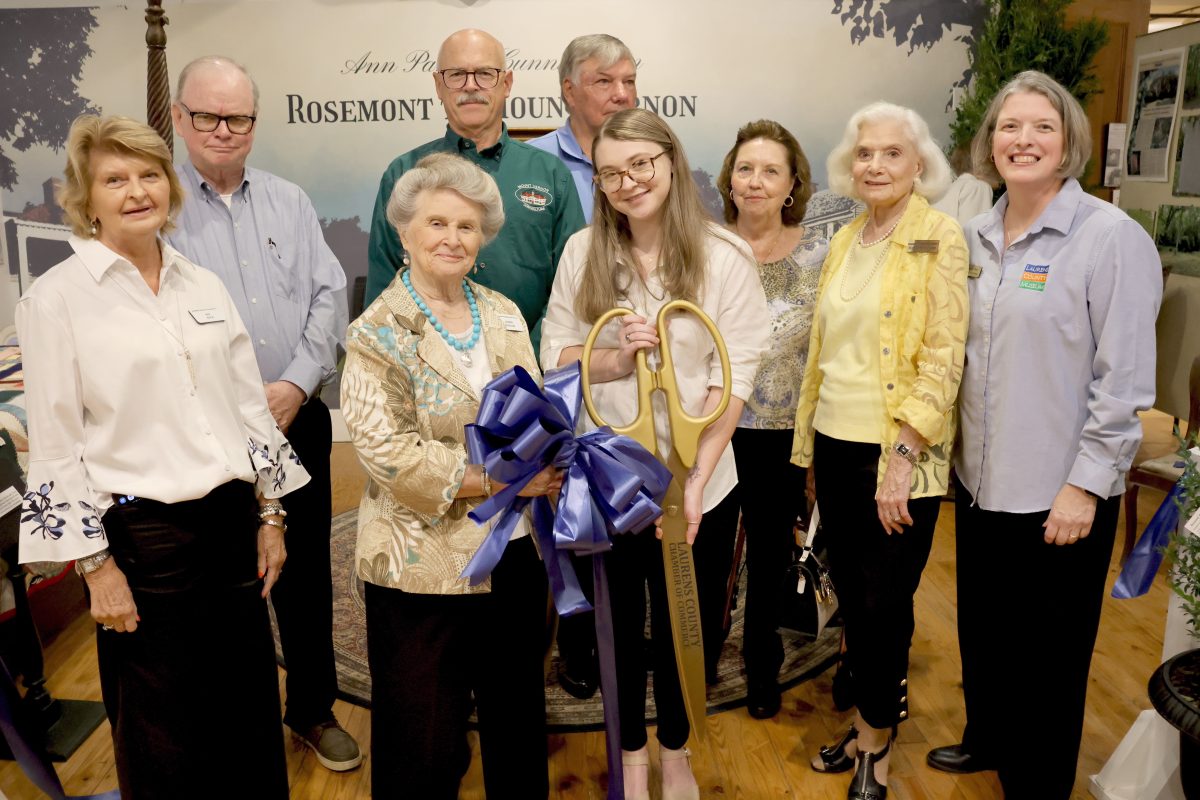
Thursday brought together the board members for the Rosemont Preservation Society and Dean Norton, the head landscaper at Mount Vernon, for a Chamber of Commerce ribbon-cutting ceremony announcing the opening of the exhibit.
 Some 50 years after Washington’s death, Cunningham’s mother spotted the deteriorating Mount Vernon and suggested her daughter try to start a fundraising campaign to save it. Within a few years, the Mount Vernon’s Ladies Association had been formed, raised $200,000 – worth about $8 million today – and purchased the home and acreage.
It happened through large ads put into the Charleston Mercury in December of 1853 and letters written by Cunningham and mailed to women of influence wherever they could be found.
“We are here because of the legacy of a very special woman who wanted to preserve the history of the father of our nation,” said Laurens Mayor Nathan Senn. “And while it is a tragic loss that her home itself burned, perhaps this is just one small way that we can return to her some honor and thanks and recognize her legacy and that of her family.”
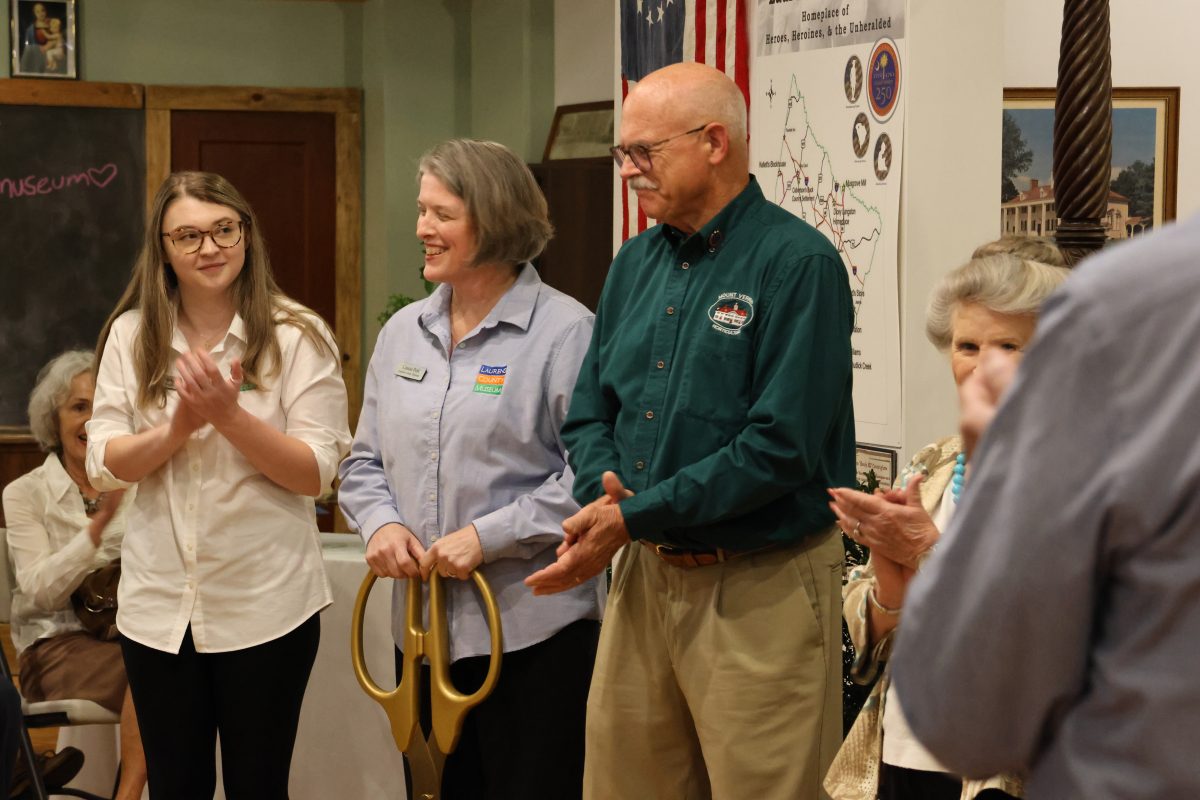 Norton was struck by the fact that both Ann Pamela Cunningham and George Washington had significant obstacles they had to face in their respective lives.
“Pamela, from a horse riding accident, had to deal with those injuries all her life, and Washington had to deal with a defective education,” Norton said. “It was basically a sixth-grade education that really haunted him all of his life. John Adams (the second president of the U.S.) said he had a gift of silence because he didn’t want to talk to other people that he thought were scholars. But both of them overcame those obstacles, and both of them seemed to take on missions that seemed hopeless.”
Washington, with troops who were untrained and few in numbers and Cunningham, who was an invalid , faced difficult challenges but both succeeded in their tasks.
“Either one of them could have said, ‘Enough is enough’ at any point, and no one would have given it a second thought,” Norton said.
Norton has attended several local events and helped maintain the original American boxwoods which grow at the Rosemont property near Waterloo.
Norton also said he was proud of the work the Laurens County Museum and the Rosemont Preservation Society was doing in highlighting Cunningham’s effort.
“She should be respected and admired for her passion and dedication,” Norton said. “And thank goodness we have this exhibit to do that, a beautiful exhibit, by the way, and I’m just honored to be here.”
The room was designed by Caitlyn Tompkins, the museum’s new program coordinator, and a large mural flows from and connects the depictions of Mount Vernon and Rosemont.
And while the museum has been developing this special exhibit, the Rosemont Preservation Society has continued work to promote the site of Rosemont in Waterloo at 1375 Shrine Club Road near Lake Greenwood.
A ceremony is planned for 11 a.m. Monday, Nov. 14 when the Laurens County Trails Association will join the Rosemont Preservation Society to break ground on a new parking area and trail to the homesite. The Rosemont home was one of the largest houses constructed in the South Carolina back country prior to the Revolutionary War, and the property was part of a land grant to the Cunningham family.