
Autistic author, speaker says take children out of the ‘autism box’
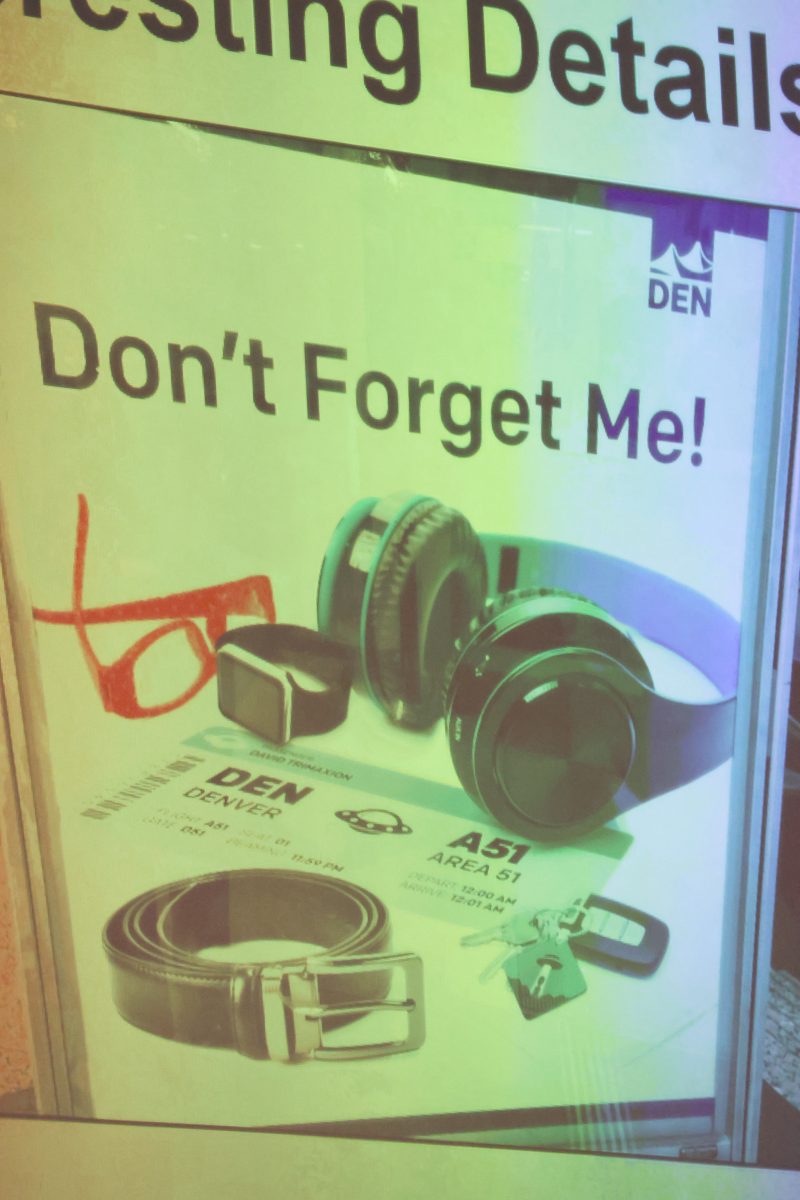
IN THE DETAILS – Temple Grandin laughed about the boarding pass to Area 51 at the Denver Airport, adding that some autistic people catch very important details missed by others. All photos by Judith Brown.
Clinton, S.C. – Lynda Head’s son was 2 years old when he was diagnosed with autism, and a little research at the time quickly lead her to autistic author Temple Grandin, the keynote speaker at Presbyterian College’s recent Chadwell Special Education Institute.
“He’s almost 17 now and since he was 2 years old, getting to hear her speak was part of my bucket list,” said the Lexington, South Carolina, woman.
She was one of dozens clustered around a book table and spilling out of the lobby of Presbyterian College’s Belk Auditorium following Grandin’s talk to a capacity crowd last week.
Grandin, who quoted her own term, “different – not less,” shared about her journey growing up at a time when little was known about those with autism and the autism spectrum.
“I got expelled from my high school in 9th grade when I threw a book at a girl who called me a retard,” Grandin said to loud applause.
She was then enrolled by her mother at a high school which allowed for differences in learning styles. A former NASA scientist was her science teacher who saw her potential.
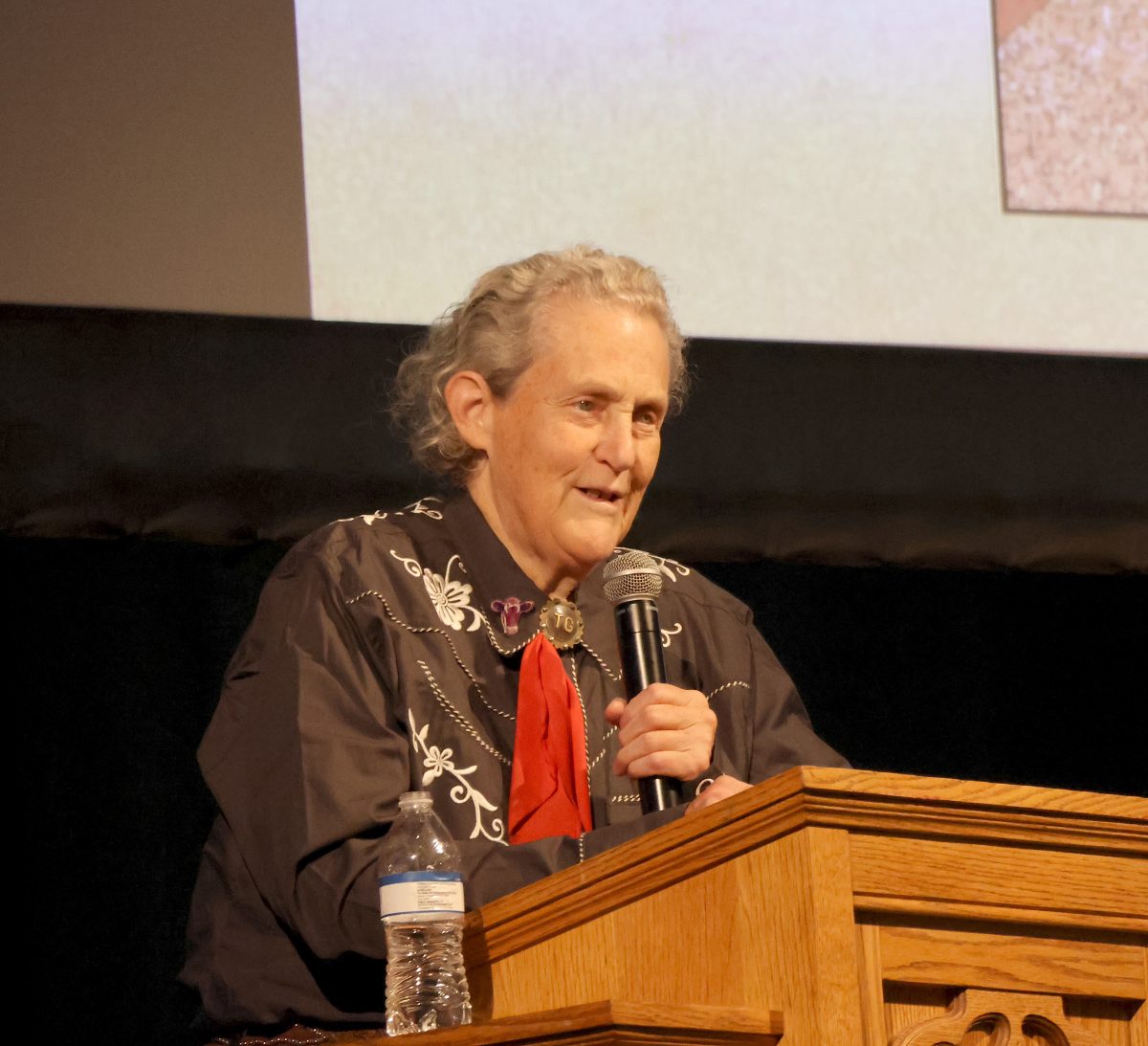 Eventually her science teacher helped her get accepted to college, in spite of her inability to pass algebra. But her required work on the high school’s farm, and time on her aunt’s farm in California, lead to Grandin’s invention of more humane agricultural systems. And decades ago she began teaching as a professor of agriculture at Colorado State University.
“The first step is you have to notice that people can think differently,” Grandin said, who explained she is a visual thinker, noticing minute details that others do not.
It’s why the chutes she invented for cattle and other animals heading to slaughterhouses help alleviate stress in the animals by minimizing contrasting light and shadows.
She was able to understand that because of her visual thinking, she said, but many people with other problem-solving strategies, including those with various labels of disabilities, are needed to solve more of the worlds’ problems.
“Object visualizers, mathematicians and verbal thinkers all see risk differently and they do problem-solving differently, but they’re all important,” Grandin said. “All the way through the 1970s, 20 percent of those who were inventing new things were dyslexic. And in my day, special-ed kids owned the technical shops, but now they’re not allowed near them.”
The nation’s emphasis on university study over technical study has done a disservice to the United States, she said, giving as an example her visit several years ago to NASA at a time when the elevators were broken for two weeks.
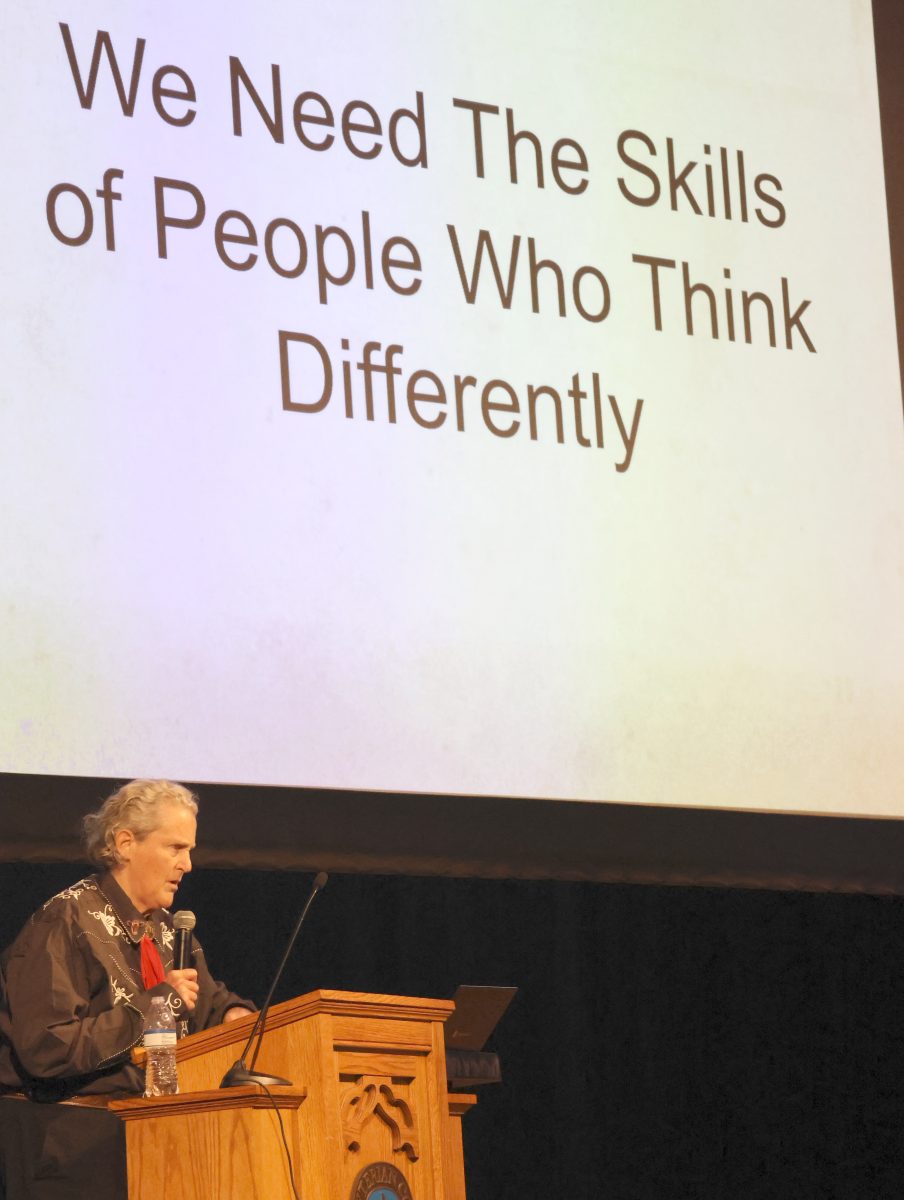 “We’ve lost the skills to build and fix things,” she said. “I love LEGOs and they’re great for children for building and creating but children have to quickly graduate to using real tools and have opportunities to use them.”
Grandin recommends that all children, no matter their label, should be given some sort of volunteer or small paid job under someone who is not a parent by the age of 13 in order to prepare gradually for the workforce.
“Autistic children today can get stuck in an ‘autism box,’ but when I was 13, I was sewing simple things for people. Then at 15 I was cleaning horse barns,” she said. “At 16 I was repairing people’s roofs – that would probably be illegal today but I did it. But working outside the home helped with my relational issues.”
 Many of Grandin’s books help parents and educators understand ways to help children on the spectrum, and they are based on her experiences and the research of others.
One of her first inventions in college was to make a “squeeze machine” because she noticed that added physical pressure helped calm her anxieties.
“Physical pressure won’t help everyone with autism but it might, so try using a weighted blanket just to see if it helps,” she said. “Install non-flickering LED lights to help with light sensory problems, or try using pastel colored paper for dyslexic children. Sometimes children who are nonverbal can communicate by learning to type, and if they don’t like noise, let the child control the vacuum cleaner so they have control over the noises in the home.”
Grandin’s story was the focus of a 2010 HBO film, Temple Grandin, and her books are available through her websites, templegrandin.com or fhautism.com.





I think Temple Grandin is an American Hero. I also believe that all important planning committees should include at least one person with autism just because they do see things differently.